Executive summary: A needs-based customer segmentation of electrolyte powder brand LMNT shows how product-segment fit and market size can help determine which customers a company should prioritize. The example demonstrates how customer segmentation can help companies develop targeted marketing messages, differentiate their products, and identify opportunities for growth.
How Do You Market & Sell a Product Your Customers Can Make Themselves?
I love electrolyte powders. Actually, I make my own electrolyte powder, using a mix of low-sodium salt and citric acid. (This once led me to get stopped by airport security to have my weird, unlabeled powder tested). There are many different electrolyte powders on the market, but most of them use pretty simple ingredients, not too dissimilar from my home-brew. In fact, popular electrolyte powder brand LMNT actually provides customers with a recipe to make its product at home.
Companies that sell electrolyte powders have at least two challenges to overcome:
- First, companies need to convince consumers that they’re worth buying. Electrolyte powders are fairly simple products, and the mixes are mostly selling convenience. Also, they’re supplements, which means that consumers don’t necessarily need them in the same way they need food or beverages.
- Second, electrolyte powder brands also face the challenge of differentiating themselves in the crowded health and wellness market.
Customer segmentation helps companies address these challenges and develop more effective marketing messages to differentiate their products. Companies can focus on the particular benefits that matter to each group, rather than trying to appeal to everyone in the same way. Customer segmentation can also help companies decide which customers are the most attractive to target. Some customer groups might be larger, growing more quickly, or simply a better fit for the product.
In this article, we’ll look at LMNT as a customer segmentation example. How can a company selling a relatively simple product use customer segmentation to differentiate itself, reach the right consumers, and identify opportunities for growth?
What is a Needs-Based Customer Segmentation?
Why Use One?
For LMNT, we’ll be using a needs-based customer segmentation.
Needs-based customer segmentation focuses on the needs of customers that are met by a product. Needs-based customer segmentation can be contrasted with other kinds of customer segmentation. For example, geographic customer segmentation looks at where customers live, while demographic customer segmentation looks at characteristics like age, race, or gender. Those can be great ways to understand customers. But needs-based customer segmentations have the advantage that they make it very clear how to speak to customers.
I’ll also be combining this segmentation with an estimate of how large these segments are in the United States. This is helpful when it comes to evaluating how attractive a segment is, although there are other factors that contribute to segment attractiveness.
One disadvantage of needs-based customer segmentation is that the segments aren’t necessarily mutually exclusive. In other words, a customer might fall into more than one segment. For the purposes of writing marketing copy, that’s not really a problem. For market sizing and strategy, however, it can be more of an issue, because overlapping segments complicate quantitative measurements like market size. Still, for making strategic decisions in broad strokes, it can provide some insights.
Needs-Based Customer Segmentation for Electrolyte Brand LMNT
The table below includes information on the segments emphasized in LMNT’s marketing materials, a quick assessment of their size as based on a few indicators, an explanation of how LMNT meets each segment’s needs and and assessment of how good the fit is between the product and that segment, and finally an assessment of the emphasis LMNT places on each segment in their marketing.
| Segment | Size | How LMNT meets their needs | Product – segment fit | Marketing emphasis |
| Low-carb/Keto Dieters | Medium– 5% of Americans reported following a keto diet, 7% a low carb (all keto would also fall into low carb) | Sodium supplementation | Very strong – product was created to supplement founder’s low-carb diet | High – LMNT has many FAQs and articles about Keto/Low-carb diets |
| People who fast | Medium/Large – 15% of Americans reported having intermittently fasted in the last year | Supplying electrolytes without calories (which “break” the fast) | Very strong – all formulations of LMNT address need for electrolytes without affecting the fast | High – explicitly featured in product descriptions, FAQs, etc. |
| Athletes | Large – 81 million Americans held gym memberships in 2025 | Replaces electrolytes lost through sweat during exercise | Moderately strong – some athletes might prefer a drink that supplies fast-acting carbs | Medium high – Prominently featured on website FAQs, images, etc. |
| Individuals with certain medical conditions | Medium/Small – POTS, for example, is estimated to affect between 1-3 million Americans | Some people need to consume more sodium than others to stay healthy, like those with CF or POTS | Conditionally strong – not every medical condition calls for electrolytes, but some do, and this is a good option free of many other additives | Medium – LMNT has a lot of educational articles, but it’s not as front and center |
| General wellness | Very large – 52% of U.S. consumers say they are willing to pay more for beverages supporting health and wellness goals | Convenient electrolytes for daily hydration | Moderate/weak- while LMNT makes a case for sodium for everyone, benefits are less clear – half of Americans are concerned with too much dietary sodium | High – LMNT makes a general wellness case for increased sodium quite prominent |
Customer Segmentation:
Very Large Segments or Very Strong Fits Get Most Focus
The above analysis is based on my independent research into the size of these segments, along with LMNT’s website and the segments they choose to emphasize. LMNT actually grew out of its founder’s experience with a low-carb diet, when he began to notice problems with his sodium intake. So, it’s not surprising that low-carb, paleo, and keto consumers are a major focus for the brand.
LMNT seems to place the greatest marketing emphasis on segments that have either a strong product fit or a very large market size. Its most highly-emphasized segments appear to be low-carb/keto consumers, people who fast, and general wellness consumers.
One thing to note here is that even though the product/segment fit for general wellness consumers is only moderate, LMNT puts a high level of emphasis on these consumers. This outlier might be explained by the very large size of the segment, which makes it attractive, even if the fit is somewhat weaker. Furthermore, it seems that the founder of LMNT believes very strongly in increasing sodium and potassium intake for most people, to the point that the brand offers a recipe for people to recreate the product at home, so some of the emphasis on this segment might simply reflect a desire to help people. The move might be both altruistic and strategic, given the size of the segment.
This same observation about size might also help explain the greater emphasis on athletes as opposed to people with POTS, despite the fact that people with POTS might actually have a stronger fit with LMNT as a product as compared to athletes. Because athletes are a much larger group than people with POTS, it makes sense for LMNT to focus more attention on reaching that market.
Of course, a more comprehensive analysis would consider other factors, particularly segment growth potential. But already, we can see how segment size and product fit help explain LMNT’s marketing emphasis.
How LMNT Uses Customer Segmentation to Develop Marketing Messages
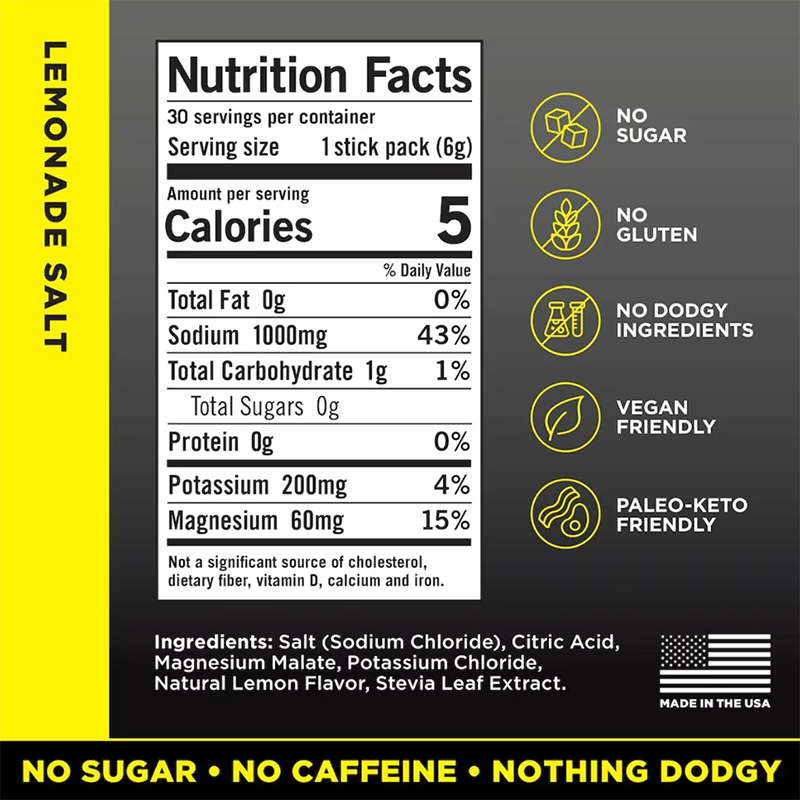
LMNT also uses customer segmentation to develop marketing messages for different consumers. As you can see above, its products indicate their suitability for low-carb and keto diets, while its website includes articles about sodium and VO2 max for athletes, and whether LMNT breaks a fast. This consumer education speaks to the particular needs of each segment.
What’s the Bottom Line on Needs-Based Customer Segmentation?
In this article, we’ve seen how needs-based customer segmentation can help with both marketing and growth strategy. Customer segmentation helps companies differentiate their products, develop marketing messages and rhetoric, and decide which customer groups to prioritize.
If you are curious to learn more about customer segmentation, the experts at Insight to Action can help. Our resources page features more articles about customer segmentation, new products, growth strategy, innovation strategy, and more. You can also contact us to speak with an ITA team member, or sign up for our newsletter to hear from us on a more regular basis.