

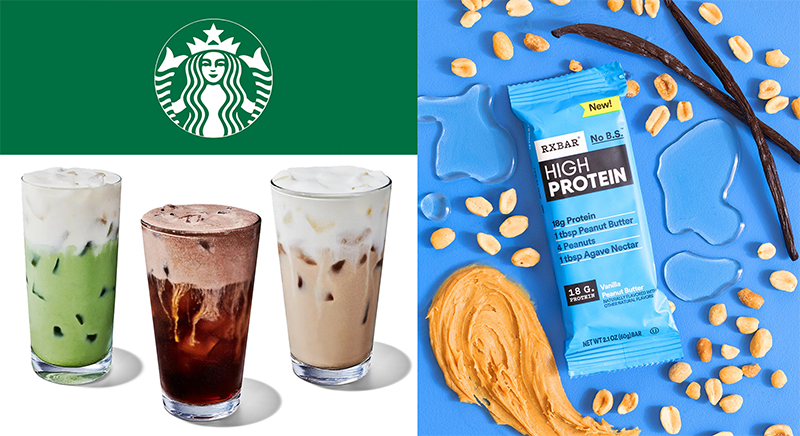
Executive Summary: Building on recent work discussing the impacts of GLP-1 drugs on the prepared foods market, this new product examples article analyzes two new products in the food and beverage industry to illustrate two ways of looking at food: the “interventionist” philosophy focuses on taste and desired macronutrient profiles, whereas “natural” customers, while not unconcerned with nutrition, are more focused on perceived purity and simplicity of their food and beverages.
How “Interventionist” vs. “Natural” Philosophies of Food Shape the Ever-Growing High Protein Food Market
Recently, I wrote “GLP-1 Growth Strategy Examples from Danone, Conagra & Nestlé,” examining how three major corporations responded to the challenges and opportunities posed by the widespread adoption of GLP-1 drugs. A major piece of that puzzle was protein: GLP-1 consumers are seeking more protein-dense foods.
Today, we’ll deepen the discussion: by analyzing new product examples, we’ll see a divide between “interventionist” and “natural” approaches to protein. Companies looking to benefit from the high-protein craze must understand which sort of customers they want to reach, and how different views of food make different products appealing.
Protein has enjoyed years in the spotlight. Prepared Foods Magazine called protein:
“the nutrient that most captivates American consumers year in and year out.”
But enthusiasm for protein seems to have hit a fever-pitch in 2025:
- Starbucks is pushing protein cold foam.
- RXBar, already a seller of protein bars, is launching a new version which is even higher in protein.
- Purely Eizabeth is introducing a protein oatmeal.
- We’ll soon see protein Pop-Tarts and Doritos hit the shelves.
Let’s dig into the details of two of these aforementioned new products examples: Starbucks Protein Cold Foam and RxBar’s High Protein bars. We’ll see two very different food philosophies reflected in these protein products.
Starbucks New Product Examples: Premium Protein Cold Foam
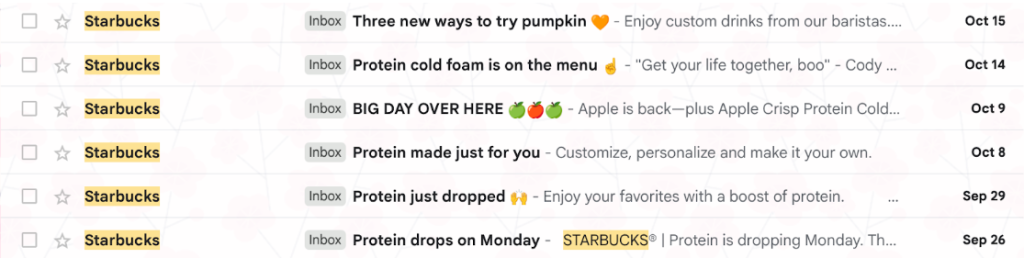
Starbucks introduced a number of new protein drinks in late September 2025. As a Starbucks Rewards member, I get their marketing emails once or twice a week. You can see below that in five out of the six most recent emails, the word “protein” is in the subject line or in the preview (the sixth email also features protein cold foam in the body of the message). Starbucks is emphasizing these new product examples very heavily.
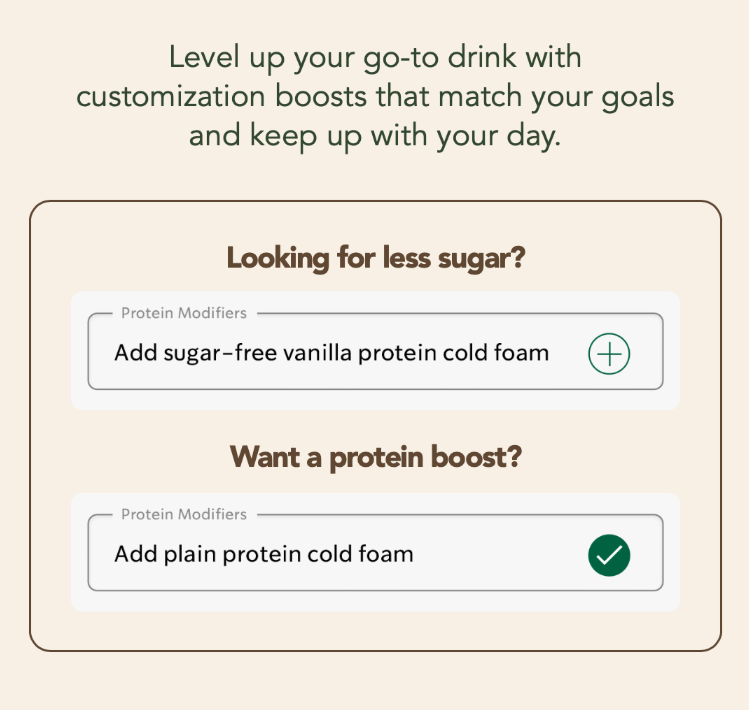
Opening up these emails, we can see how the products are being marketed, especially the cold foam. Below is a screenshot of a portion of the “Protein made just for you” email. We can see that cold foam is pitched as a “customization boost,” helping customers to “meet their goals.” Two types of cold foam are displayed, each of which could suit a different functional need.
In an article on the “news” section of the Starbucks website, we can read that cold foam is part of a broader initiative to “modernize” the Starbucks menu:
“Tapping into the popularity of cold foam, which grew 23% year-over-year and is used in 1 out of every 7 beverages, customers will be able to order Protein Cold Foam — which adds about 15 grams of protein per grande to any cold beverage.”
The comment about modernization is telling – Nino Paoli, writing for Fortune, speculates that, by adding protein shakes to Starbucks iced coffees, the cold foam:
“may substitute a viral trend that had customers act as their own mixologists in the coffee chain’s drive thru”
Customers were looking to alter the nutritional profile of their favorite drinks while maintaining the flavor.
The new cold foams are available in a variety of flavors. To look at one example, according to the Starbucks website, the “chocolate cold brew cold foam” (one flavor) contains:
- Brewed Coffee
- Water
- Ice
- Cream [Cream, Mono And Diglycerides, Carrageenan]
- Vanilla Syrup [Sugar, Water, Natural Flavors, Potassium Sorbate, Citric Acid]
- Milk
- Whey Protein Isolate [Milk]
- Sunflower Lecithin
- Mocha Powder [Sugar, Cocoa Processed With Alkali, Natural Flavor]
Looking at this ingredient list, we can see that the protein source is whey, which comes from processing milk. Whey is actually a by-product of certain other dairy products such as cheese and yogurt. Using whey as an additive therefore captures the value of something that might otherwise go to waste.
We can also see this foam, presumably in order to achieve the desired taste, texture, and nutritional profile, is a fairly highly processed food. For example, it includes not one but two different kinds of emulsifiers or stabilizers (lecithin and carrageenan).
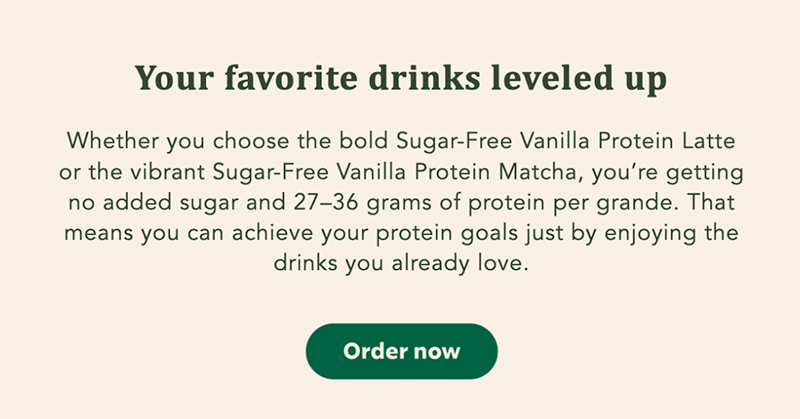
Finally, below is another image of a different marketing email that captures the last important element of the protein cold foam: the claim not to alter taste. As we can see, by writing that customers can enjoy drinks they “already love,” they suggest that there will be no trade-off when it comes to taste.
So far, then, protein cold foam comes to sight as a highly-processed food product that captures market trends and appeals to customers looking to customize the nutritional profile of their coffee drinks. More on this in a moment: for now, let’s turn to our second of two new product examples, the RxBar High Protein.
RXBAR New Product Examples: High Protein Bars Tout Simple Ingredients
You may be a bit surprised that I am listing RxBar High Protein as a new product example, considering that all of their products are protein bars. For 2025, the standard RxBar, with 12 grams of protein, is not good enough: the new RxBars contain 18 grams of protein.
Chocolate Sea Salt RxBar Lists 8 Ingredients on the Back
The RxBar website describes them this way: “Our Chocolate Sea Salt bars are made with 100% chocolate, and a few other simple ingredients – egg whites for protein, dates to bind and nuts for texture.” Here’s the complete list:
- Dates
- Egg Whites
- Cashews
- Almonds
- Chocolate
- Cocoa
- Natural Flavors
- Sea Salt
The Chocolate Sea Salt Bar is being marketed as natural. The ingredients are simple, and none of them have long names (although the chocolate and natural flavors could include a variety of ingredients). For the most part, everything is recognizable, and the ingredients are few. This is the RxBar brand, and the name also suggests health: the idea seems to be that a simpler product is healthier.
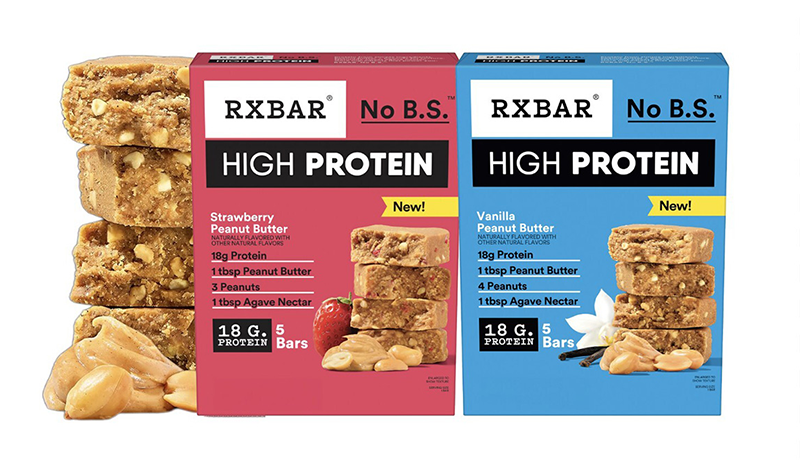
The new High Protein Bars still have few ingredients. For example, the Vanilla Peanut Butter flavor has 6 ingredients:
- Peanut Butter
- Agave Nectar
- Pea Protein
- Peanuts
- Vanilla Beans
- Natural Flavors
RxBar described their goals with this new product in a press release through PR Newswire:
“[we have] a commitment to doing things differently in a space crowded with overprocessed products and the overcomplicated claims that clutter the protein bar aisle. It’s about spotlighting what matters: ingredients with purpose, flavors that hold up, and benefits you don’t have to decode.”
The same press briefing touts that the product has “just six recognizable ingredients” and compares it favorably to other protein bars, which it describes as “engineered.”
While Pea Protein is extracted from peas through a highly industrialized process, and is certainly more highly processed than the egg whites used in RxBar’s original line of products, nonetheless it is the case that RxBar seems to be maintaining its brand identity even with this new product. RxBars, even in 2025, are made with a few ingredients you can pronounce (and those pesky natural flavors).
What Can We Learn from These New Product Examples?
Both of these new products appeal to customers who are seeking higher protein options, but they seem to typify two different approaches to food. Where Starbucks uses a long list of ingredients and additives to sneak more protein into their coffee, RxBar wears its ingredients on its sleeve and attempts to keep things simple even while adding more protein.
While both RxBar and Starbucks might ultimately be using highly processed ingredients, nonetheless the way these products are pitched is very different. We can articulate two different ways of thinking about food reflected by these two products. I’ll call the people who think these ways “interventionists” and “naturals.”
The “Interventionists:” Processing is a Tool to Increase Protein
One way to think about protein is as a number that we want to increase. In whole-food sources, protein is mixed with other macronutrients like carbohydrates and fats. Even a skinless chicken breast (a very protein-dense food) has a little more than one gram of fat per ten grams of protein. In order to increase just one macronutrient, especially while not altering taste, a significant amount of processing is in order.
Prevention.com identifies both “protein everything” and “a more balanced view of processed foods” as dietary trends for 2025. These two trends are not unrelated: the push for isolated protein demands more tolerance for processing.
When we look at Starbucks’ marketing content, we see them making a promise that can’t be filled by whole foods: we will increase protein and just protein, and we will do it without changing the taste of the product. Starbucks’ marketing, and the cold foam in particular, appeal to an optimizer’s view of food, someone who is looking for a particular macronutrient count and is unbothered by the manipulation of the food that is required to reach that outcome. The new protein cold foam suits a way of thinking about nutrition as adding numbers up. It can literally be “added” to any drink.
The “Naturals:” Whole Foods Are Healthier
Another way to think about food is to prefer products that come closer to being whole foods. Instead of thinking about nutritional profiles as something to be manipulated with various additions and subtractions, nutrition can be viewed as intrinsic to a given food. Increasingly, some consumers are avoiding ultraprocessed foods.
RxBar customers are certainly not indifferent to macronutrients; the new High Protein Bar attests to that. However, their labels and ingredient lists seem designed to appeal to someone who is suspicious of processed or engineered foods. The focus on short, simple ingredients lists would appeal to a “natural” consumer.
Two New Product Examples, Two Paths
Both Starbucks and RxBar have identified a niche and are speaking to it. In creating a new product, it is important to understand what consumers want, and these two products reflect the fact that even among consumers who want more protein, some are focused on taste and macronutrient optimization, whereas others are more concerned with the integrity of the ingredients.
The ideal response to today’s protein craze is not simply to “add protein” to existing products. Companies need to correctly identify the underlying philosophy of food held by their consumers. The most successful protein products will not just provide protein, but successfully appeal to a worldview of what food should be.
When it comes to understanding how customers think, marketing your products, brand strategy, and more, Insight to Action can help. Our resources page has more information on all these topics. You can also contact us to speak with a member of our team about these topics, or subscribe to our newsletter. We hope you will consider working with us.
